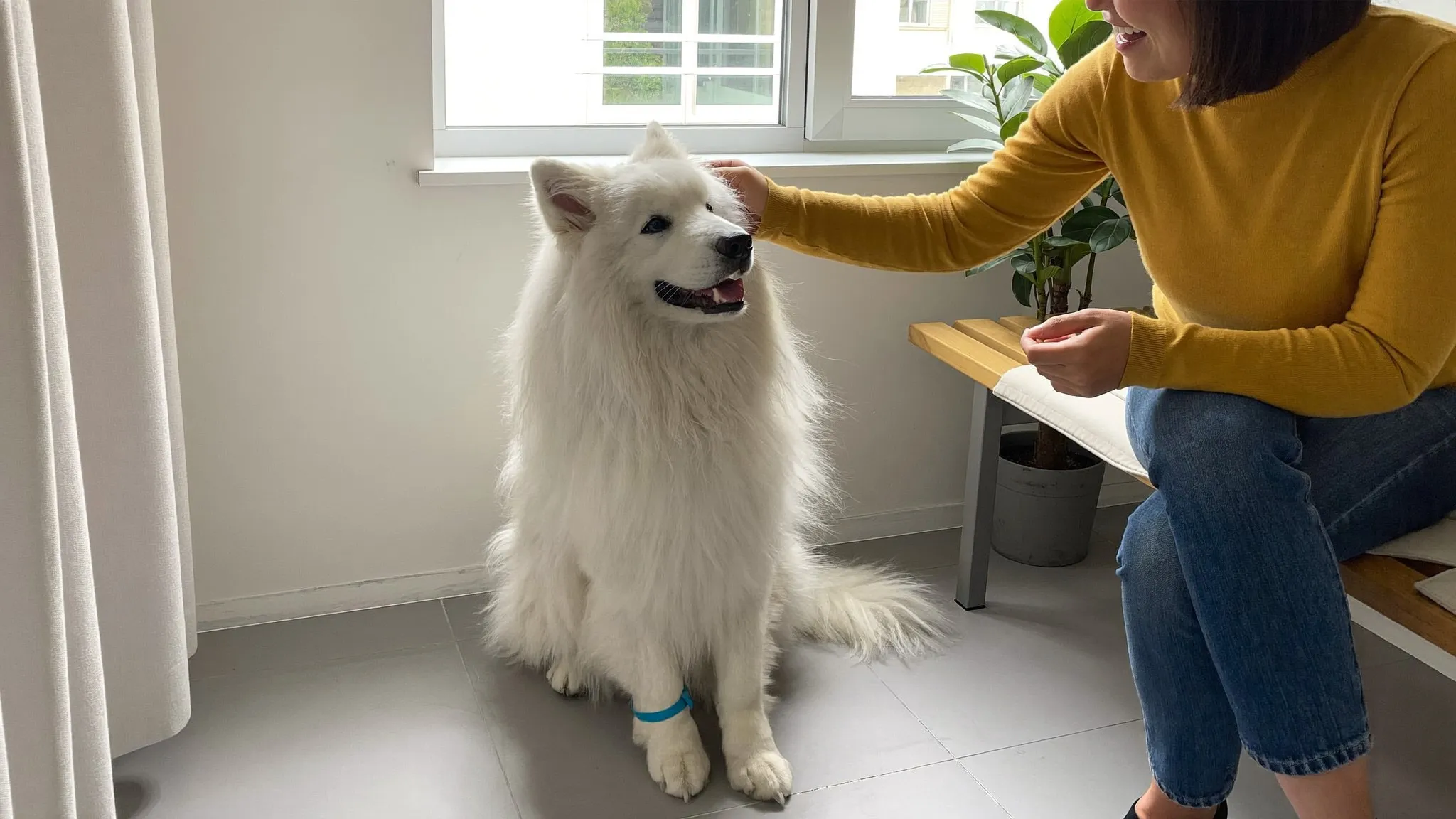
Assistance dogs on flights: rights and rules
Assistance dogs on flights: free cabin carriage in the EU, 48 hours' notice, the two US DOT forms, and the entry rules that still apply.
By the Loulou Air team · · 8 min read
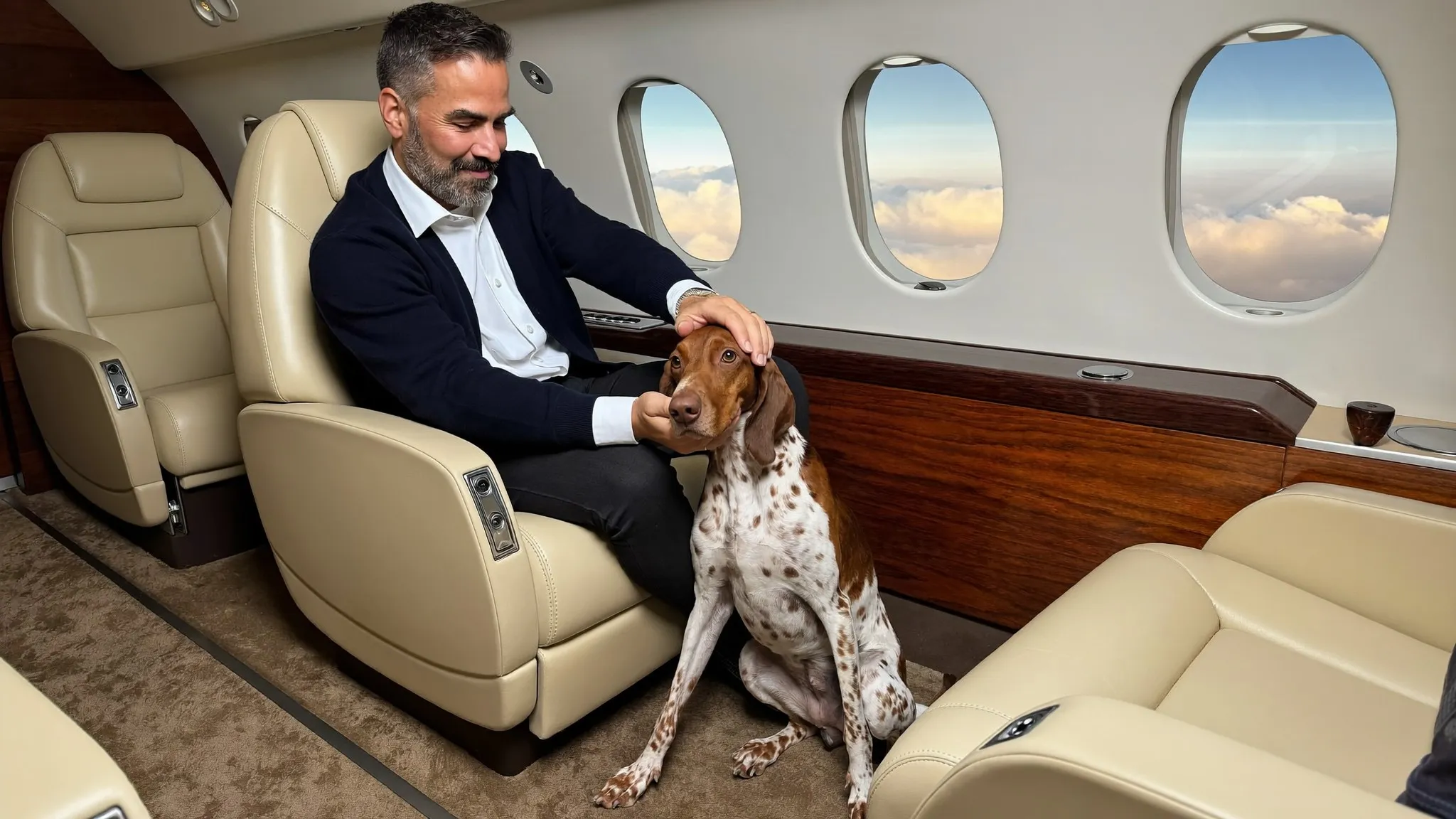
A recognised assistance dog travels in the cabin with its handler, free of charge, on flights covered by the European rules. In the United States the federal definition is narrower: only a dog individually trained to help a person with a disability counts, and the airline may ask for official forms before departure. Here are the texts, the deadlines and the paperwork. For a dog that fits none of these definitions, the cabin on scheduled airlines stays limited to small sizes, which is where Loulou Air’s Pay-per-Seat private flights come in, with none of the weight limit imposed by scheduled airlines.
What counts as an assistance dog for an airline?
It depends on the rules that apply to the flight, not on the dog. In Europe, Regulation (EC) No 1107/2006 on the rights of disabled persons and persons with reduced mobility provides, in the first point of its Annex II, for the carriage of recognised assistance dogs in the cabin, subject to national regulations. The word “recognised” does the work here: national law decides which dogs qualify.
In the United States, the Department of Transportation rule published on 10 December 2020 and effective on 11 January 2021 defines a service animal as a dog, regardless of breed or type, individually trained to do work or perform tasks for the benefit of a qualified individual with a disability, including a physical, sensory or psychiatric disability. The same text excludes species other than dogs, emotional support animals, comfort animals and companionship animals from that definition.
France is an example of how national rules fill in the European text. The official French government page covers guide dogs and assistance dogs accompanying holders of the “carte mobilité inclusion” bearing the disability and priority markings, and extends the same right of access to dogs accompanied by the person responsible for their training.
What are your rights on a European flight?
Carriage of your recognised assistance dog in the cabin is free of charge. The regulation also bars an air carrier, its agent or a tour operator from refusing a booking or refusing boarding on the grounds of disability or reduced mobility.
Article 4 sets out two exceptions. A refusal is still possible in order to meet safety requirements laid down by international, Community or national law, and where the size of the aircraft or its doors makes boarding or carriage physically impossible.
Where does the dog sit? The European Commission’s interpretative guidelines state that recognised assistance dogs normally sit in the floor space in front of their owner’s seat. Where that is not possible, for instance because the dog is too large, the carrier must offer another suitable solution at no extra cost, such as a free seat for the dog next to the person with a disability.
How much notice does the airline need?
At least 48 hours before the published departure time of the flight. Article 7 of the European regulation makes the assistance conditional on notification given to the air carrier, its agent or the tour operator within that deadline, and the Commission’s guidelines repeat the same timing for a passenger travelling with a recognised assistance dog.
Shorter notice does not cancel the trip. The regulation provides that, absent notification, the airport’s managing body shall make all reasonable efforts, and the European information page for travellers states that the carrier must at least try to help so that you can travel as planned.
The guidelines add one substantive condition: the carriage must comply with any national rules applying to assistance dogs. So when you notify the airline, ask what proof it expects.
What paperwork do US flights require?
Two forms, depending on how long the flight is. As a condition of carriage, the airline may require the U.S. Department of Transportation Service Animal Air Transportation Form. On a flight segment scheduled to take eight hours or more, it may also require the DOT Service Animal Relief Attestation Form.
The deadline matches the European one: the airline may ask for these forms up to 48 hours before travel. The form attests, among other things, that the dog is vaccinated against rabies and trained to behave in public, and it ends with a box confirming that knowingly false statements expose the signer to fines and other penalties.
The same rule frames what an airline may and may not do.
- Breed is not a ground for refusal. The rule bars airlines from denying transport to a service animal because of its breed or type.
- Two dogs at most. An airline is not required to accept more than two service animals for a single passenger with a disability.
- Space on board. The dog must be able to travel on its handler’s lap or in the handler’s foot space. Before refusing a large dog that does not fit, the airline must offer the passenger the chance to move with the animal to another seat.
- No fee. As a rule the airline cannot charge for carrying a service animal, though it may charge for damage the animal causes, as it would for any passenger.
- No forced airport check-in. An airline may not require a passenger with a disability to check in physically at the airport simply because they are travelling with a service animal.
- Behaviour matters. Carriage may be refused if the animal poses a direct threat to the health or safety of others, or causes a significant disruption in the cabin or at the gate.
The rule also says airlines may not add restrictions beyond those it allows, unless an authority requires them. US airlines follow suit: Delta asks for a dog that is fully trained to assist a person with a disability, rules out dogs still in training, wants the form at least 48 hours before departure and the extra attestation on flights of eight hours or more, caps each traveller at two dogs, and places the animal on the lap or in the foot space.
Do the entry rules still apply?
Yes, in every case: assistance dog status does not waive the destination country’s animal health rules. The official British guidance is explicit, listing microchip, rabies vaccination, animal health certificate and, for some countries, tapeworm treatment, then stating that these rules also apply to assistance dogs.
For travel between EU countries the European pet passport is compulsory. The microchip must be implanted before the rabies vaccination, the dog must be at least twelve weeks old for its first vaccination, and you then have to wait at least 21 days before travelling. Our article The EU pet passport for dogs goes through it.
For the United States, the CDC, the federal public health agency, requires every dog to carry its import form receipt and to appear healthy, be at least six months old and have a microchip readable by a universal scanner. Service dogs are not exempt: the CDC uses the federal definition in 14 CFR 382.3 and allows only narrow accommodations. A foreign-vaccinated dog that has been in a high-risk rabies country in the past six months, service dogs included, needs a reservation at a CDC-registered animal care facility and must go there on arrival; a service dog arriving by sea is exempt from that reservation, and these dogs may not enter at a land border crossing. Our article on the CDC Dog Import Form and our United States travel requirements page set out the steps.
Is an emotional support dog an assistance dog?
Not under US rules. The Department of Transportation rule expressly excludes emotional support animals, comfort animals and companionship animals from the definition of a service animal, and Delta states that emotional support animals are not recognised as service animals.
In Europe, Annex II to the regulation covers only recognised assistance dogs and leaves it to national rules to say which ones qualify. On a scheduled flight an emotional support dog therefore travels under the rules for pets: weight, carrier and fees, which we cover in Pet in cabin: weight limits, fees and airlines.
What if your dog is not a recognised assistance dog?
There is still a way to keep it in the cabin: flying private. On scheduled airlines the cabin is for small dogs in a carrier under the seat, and larger dogs go to the hold or travel as cargo. Loulou Air, a brand of AEROAFFAIRES, a private aviation broker since 1991, offers Pay-per-Seat private jets for your dog and you: you pay for your seat, not the jet, and each ticket covers a seat for one human and their dog. Your dog travels in the cabin with you, at your feet for the whole flight, never in the hold, and there is none of the weight limit imposed by scheduled airlines, since capacity depends on the aircraft and the number of animals on board. Boarding goes through a private aviation terminal with no queues, and the crew is briefed on welcoming animals. Entry rules apply either way, private flights included, and our brokers check every dog’s file before departure. Our flights serve New York, Dubai and Los Angeles, see our open flights, and for anywhere else we open new flights every month, so talk to a broker about the trip you have in mind; for a whole aircraft, our sister company AEROAFFAIRES arranges full charters.
Frequently asked questions
Does an assistance dog fly for free?
In Europe, yes: the official traveller information page refers to free carriage of your recognised assistance dog. In the United States, the federal rule says an airline generally cannot charge for carrying a service animal, though it may charge for damage.
How far in advance must you tell the airline?
At least 48 hours before the published departure time of the flight, under Article 7 of Regulation (EC) No 1107/2006. In the United States, the airline may require the Department of Transportation forms up to 48 hours before travel. With shorter notice, the carrier must still try to help you travel as planned.
Can an airline refuse my assistance dog because of its breed?
Not in the United States: the federal rule bars a refusal based on the animal’s breed or type. Refusal remains possible if the animal poses a direct threat to the health or safety of others, or causes a significant disruption.
Sources
Rules change: check them against these sources before every trip.
- Regulation (EC) No 1107/2006, consolidated text (Annex II, Articles 3, 4 and 7)
- European Commission - Interpretative Guidelines on Regulation (EC) No 1107/2006, OJ C/2024/5992
- Your Europe - Rights of passengers with disabilities or reduced mobility
- Your Europe - Travelling with pets and other animals
- service-public.gouv.fr - Access of guide dogs and assistance dogs in France
- US Department of Transportation - Traveling by Air With Service Animals, final rule of 10 December 2020
- Delta - Service animals
- CDC - Frequently Asked Questions on Dog Importations
- CDC - Entry Requirements for Dogs from Dog-Rabies Free or Low-Risk Countries
- GOV.UK - Pet travel to and from Great Britain