Miami with your dog: rules and beaches
The CDC import form, Florida's own rules, the three beaches where dogs are allowed in Miami and the county dog parks, with opening times.
By the Loulou Air team · · 8 min read
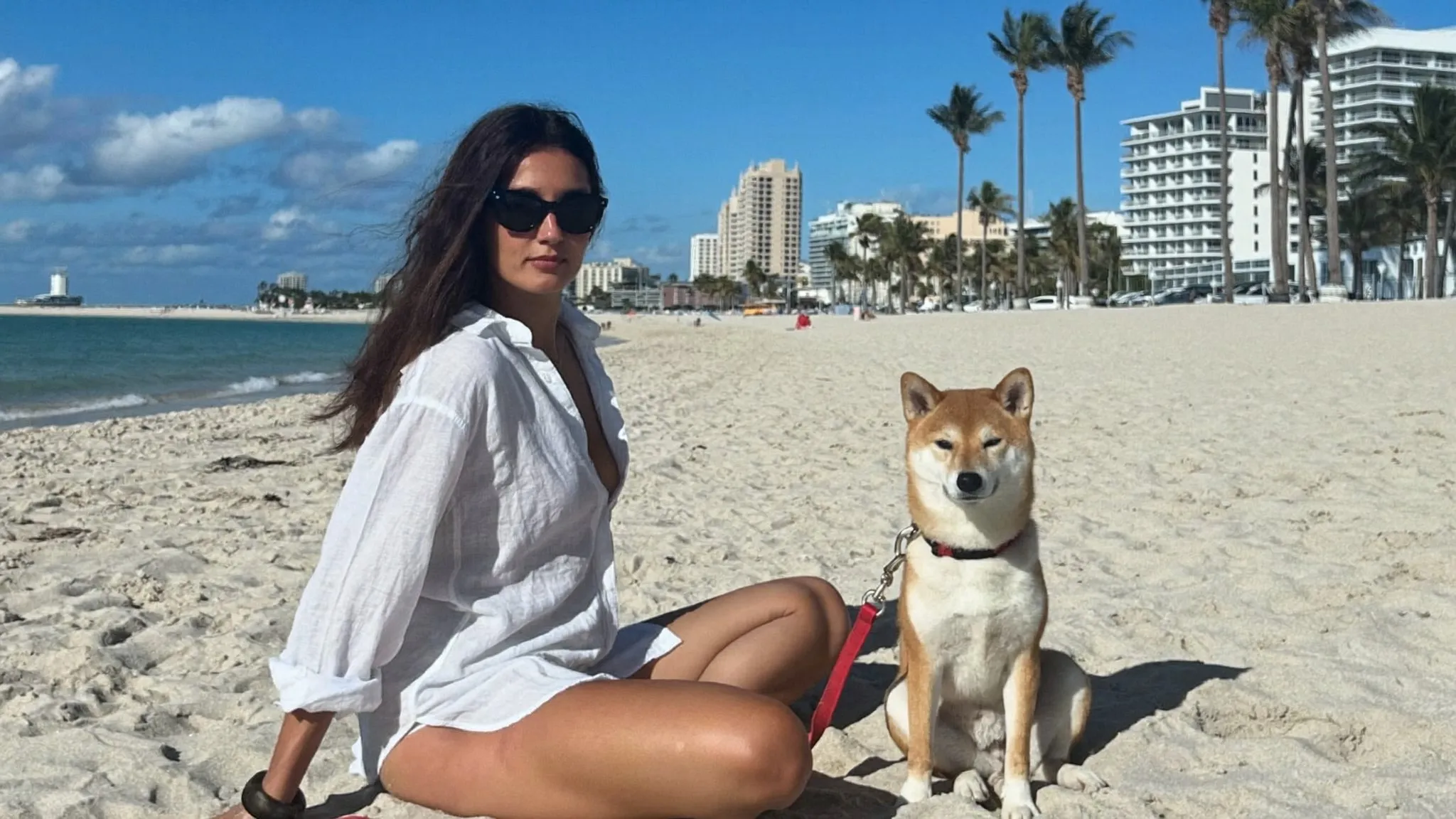
Taking your dog to Miami comes down to two things: a CDC form receipt to enter the United States, and knowing where your dog will actually be allowed on the sand once you arrive. Miami Beach closes its beaches to dogs everywhere except three designated areas, open for a few hours at a time. Here is what the CDC, the State of Florida, the City of Miami Beach and Miami-Dade County publish, as they read on 30 September 2026.
What paperwork does a dog need to enter the United States?
Only one document, if the dog is arriving from a country such as France: a CDC Dog Import Form receipt. Since 1 August 2024, the CDC states that this is the only required documentation for a dog that has been only in dog rabies-free or low-risk countries in the previous six months. France does not appear on the CDC list of high-risk countries for dog rabies, and that list says a country not shown on it is not considered high risk.
The form is completed online and it is free. A receipt is emailed to you, and you can print it or show it on your phone screen. It stays valid for six months, unless the dog visits a high-risk country or a different rabies-free or low-risk country in the meantime. Each dog needs its own form, and the CDC recommends filling it in a few days before travel, although it can be done on the day of departure.
Three further conditions apply, again according to the CDC: the dog must appear healthy on arrival, must be at least six months old at the time of entry, and must have a microchip that can be detected with a universal scanner. A dog meeting those conditions can enter at any airport, seaport or land border crossing. A dog that has been in a high-risk country in the past six months follows heavier rules, and the CDC states it will not be allowed in if it is not vaccinated against rabies. Our article on the CDC Dog Import Form takes the process step by step, and our United States travel requirements page covers the rest.
Does Florida add rules of its own?
Yes, and they stack on top of the CDC’s, which itself says you must comply with your US destination’s regulations. The Florida Department of Agriculture and Consumer Services states that in Florida, all dogs four months of age and older must have a current rabies vaccination approved by the US Department of Agriculture. That is the point to settle with your vet before you leave.
For a dog entering Florida from another US state, the same department asks for an Official Certificate of Veterinary Inspection issued within 30 days, unless the pet is privately owned and travelling with its owner, or meets an exception listed in Rule 5C-3.009 of the Florida Administrative Code. A current rabies vaccination is required from three months of age, with proof from a licensed veterinarian. Moving a dog within the state, by contrast, carries no movement requirements.
The same page also notes that most airlines require a health certificate issued by a licensed and accredited veterinarian within seven to 10 days of travel, so check with yours.
Where can a dog go on the beach in Miami Beach?
In three designated areas only, called Bark Beach, and at set times. The City of Miami Beach states that dogs are prohibited from city beaches outside the designated Bark Beach, and its parks directory lists three of them:
- South Beach Bark Beach, on the 21 Street beachfront: daily, 7 a.m. to 9 a.m. from November to March, 9 a.m. to 11 a.m. from April to October.
- Mid Beach Bark Beach, on the 53 Street beachfront: daily, 9 a.m. to 11 a.m. from April to October, 7 a.m. to 9 a.m. from November to March.
- North Beach Bark Beach, between 80 and 81 Street, east of North Beach Oceanside Park, with the entrance at Collins Avenue and 81 Street: Friday, Saturday and Sunday only, 3 p.m. to 7 p.m. from March to October, 1.30 p.m. to 5.30 p.m. from November to February.
The rules the city posts are the same in each area: a limit of two dogs per owner, a leash carried at all times and on the dog outside the designated area, collar and rabies tag worn at all times, and immediate disposal of any mess. Female dogs in heat, aggressive dogs and dogs not up to date with their vaccines are not permitted, and dogs may not dig in the sand. Elsewhere in the city, dogs must be leashed at all times.
Is there a beach where a dog can run off the leash?
Yes, at Haulover Park, run by Miami-Dade County. The county’s dog beach access rules allow dogs on the sand between lifeguard towers #2 and #3 only, and that is where they may be off the leash, provided the owner maintains control at all times. There is a limit of two dogs per person, puppies under six months old are not permitted, and the county warns that breaking the rules can mean being removed from the beach and the park.
The park’s own page adds that this access is open daily from sunrise to sunset, on the stretch of beach directly across from the Bark Park, reached through parking lots #3 and #4. Outside the designated area, dogs must be on a leash. The park is at 10800 Collins Avenue, a few miles north of Miami Beach between Bal Harbour and Sunny Isles Beach.
The neighbouring Bark Park is open from sunrise to sunset, seven days a week, near the south picnic area. It has one enclosure for dogs under 35 pounds and another for heavier dogs, with shade trees, drinking fountains and waste bag dispensers. You enter through parking lot #3 or #4 for $5.47 per vehicle, and the dog must be in the vehicle.
Where else can you walk a dog in Miami?
In the county parks, which come in three kinds. The Miami-Dade dog parks page separates dog-friendly parks where leashes are required, dog parks where dogs roam free inside a fenced area, and dog run parks, where the county asks you to bring your own bags and water because there are no facilities on site.
Five free-roaming dog parks are listed: Haulover Park, Tropical Park, Amelia Earhart Park in Hialeah, East Greynolds Park in North Miami Beach and West Kendall District Park. One set of rules covers them: vaccinations up to date, a current rabies tag displayed, a limit of three dogs per person, dogs leashed until inside the fenced area, mess scooped and holes filled in. Dogs in heat, dogs with parasites and aggressive dogs are turned away, and puppies under four months old are not allowed.
Heat is the point the county raises itself: its page advises hosing your dog down or moving it into the shade from time to time, and the Haulover dog beach rules end with a reminder to keep your dog hydrated. The Miami Beach Bark Beaches, tellingly, only open early in the morning or late in the afternoon. For warning signs, speak to your vet before you travel.
Can a bull-type dog come to Miami?
This is one to check in writing before booking. The City of Miami Beach states that pit bulls are prohibited in Miami Beach and that their owners are subject to severe civil penalties; Miami-Dade County separately states that pit bulls are not allowed in its dog parks, pointing to chapter 5, section 5-17 of the county code.
Florida Statutes, meanwhile, provide in section 767.14, amended in 2023, that a local government may add restrictions aimed at dangerous dogs provided no such regulation is specific to breed, weight or size. The two readings do not line up. If your dog is a bull type, write to the city and the county before you travel, and keep their reply.
How do you avoid the hold on a flight to Florida?
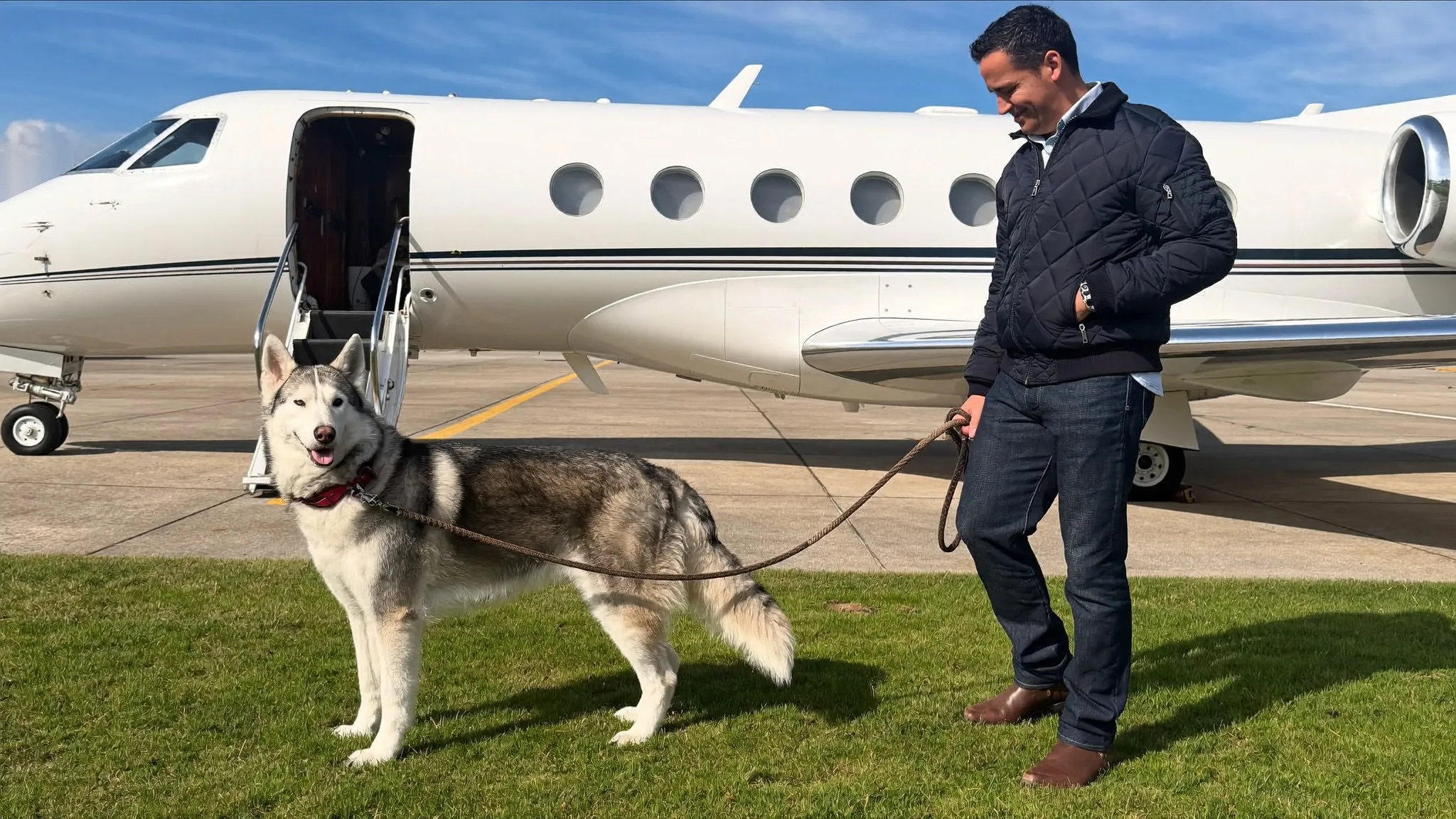
By choosing a flight where your dog stays in the cabin with you. On scheduled flights only small dogs travel in the cabin, in a bag under the seat in front; above that, the hold or cargo takes over, as our article on flying with a dog over 8 kg sets out. That is what a shared private jet flight changes, and it is the principle behind Loulou Air, a brand of AEROAFFAIRES, a private aviation broker since 1991: Pay-per-Seat private jets for your dog and you. You pay for your seat, not the jet, and your dog travels in the cabin with you, never in the hold, staying at your feet for the whole flight. None of the weight limit imposed by scheduled airlines applies, because the hold is never part of the journey; capacity depends on the aircraft and the number of animals on board, and a broker confirms each dog case by case. Boarding is through a private aviation terminal with no queues, and entry requirements remain due on every flight, private ones included: our brokers check every dog’s file before departure. Our flights currently serve New York, Dubai and Los Angeles: see the open flights. We open new flights every month, so tell us where you want to go and talk to a broker; for a whole aircraft, our sister company AEROAFFAIRES arranges full charters.
Frequently asked questions
Does my dog need a health certificate to come to Miami?
For a dog arriving from a rabies-free or low-risk country, the CDC asks only for its import form receipt. The Florida Department of Agriculture and Consumer Services does note that most airlines require a health certificate issued within seven to 10 days of travel, so check with yours.
Are dogs allowed on South Beach?
Only inside the Bark Beach area on the 21 Street beachfront, and only during its opening hours: 7 a.m. to 9 a.m. from November to March, 9 a.m. to 11 a.m. from April to October. Everywhere else on the city’s beaches, Miami Beach states that dogs are prohibited.
Can I bring a puppy to Miami?
Not before six months: the CDC requires a dog to be at least six months old at the time of entry into the United States. Once there, puppies under six months are not permitted on the Haulover dog beach, and puppies under four months are not allowed in the county’s dog parks.
Sources
Rules change: check them against these sources before every trip.
- CDC - Bringing a Dog into the U.S.
- CDC - Entry Requirements for Dogs from Dog-Rabies Free or Low-Risk Countries
- CDC - High-Risk Countries for Dog Rabies
- Florida Department of Agriculture and Consumer Services - Dog and Cat Movement Requirements
- Florida Statutes, chapter 767, section 767.14
- City of Miami Beach - Animal Care & Control
- City of Miami Beach - South Beach Bark Beach
- City of Miami Beach - Mid Beach Bark Beach
- City of Miami Beach - North Beach Bark Beach
- Miami-Dade County - Haulover Park
- Miami-Dade County - Haulover Park Dog Beach Access Rules
- Miami-Dade County - Dog Parks