Dubai with your dog: the on-the-ground guide
Leads and collars everywhere, no dogs on beaches or in public parks, no animals on the metro or in taxis: what Dubai's official texts say.
By the Loulou Air team · · 7 min read
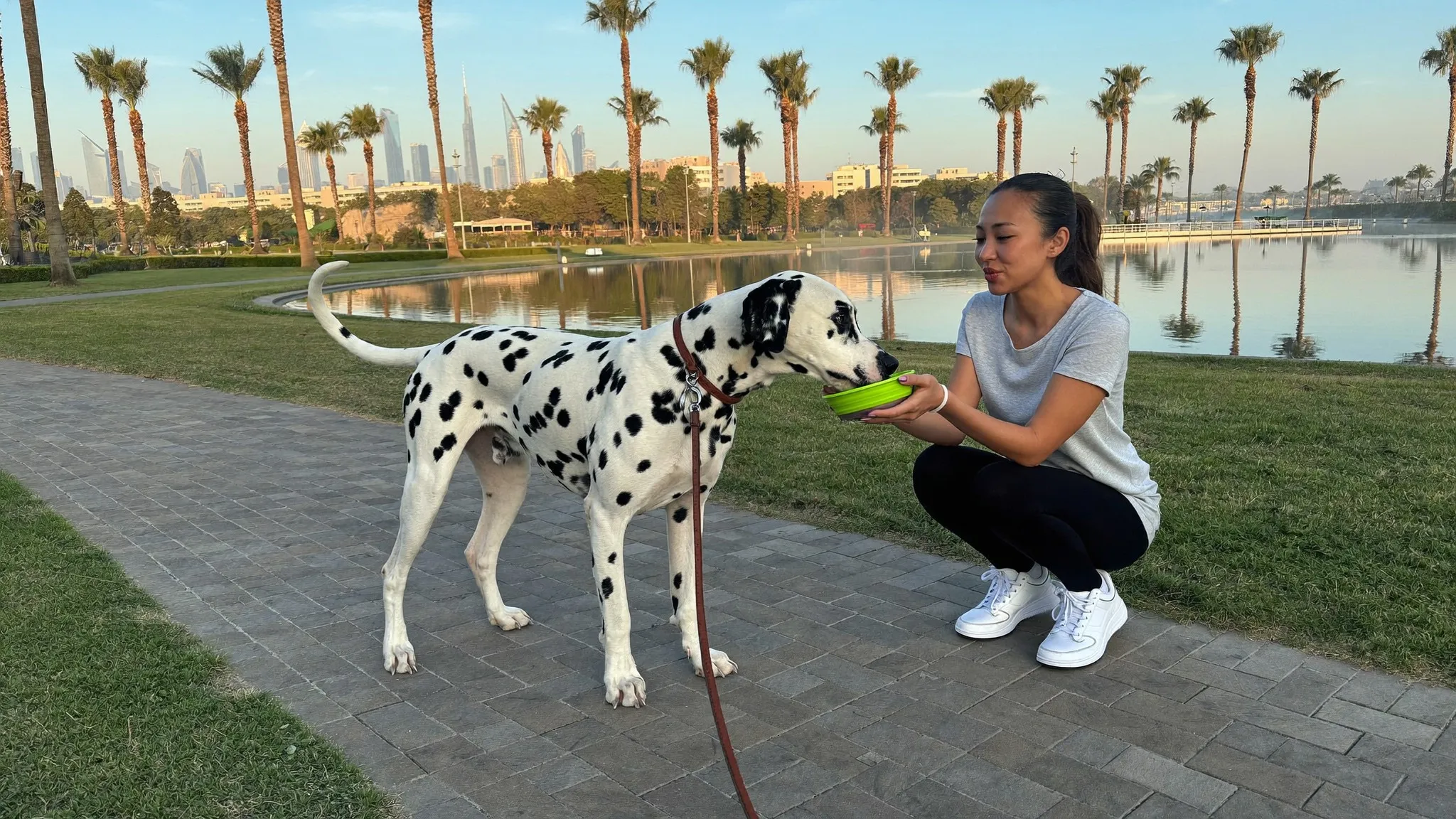
Dubai works well as a destination with a dog, but its public space is more tightly regulated than most European cities: a collar and lead are required everywhere, beaches and public parks are closed to dogs, and neither the metro nor taxis take animals. What is left is a matter of planning, both for getting around and for the heat. This guide uses only what the Dubai Legislation Portal, the UAE government portal, Dubai Municipality and the RTA, the Roads and Transport Authority, publish themselves.
Do dogs have to be on a lead in Dubai?
Yes, in every public place. The text provides no exemption for size or breed. Local Order No. (11) of 2003, which governs public health and community safety in the emirate, puts it in one sentence: dogs must be on a collar and leash when walked in any public place.
The definition of “public place” in the same text is broad. It covers a road, a street, a yard, a pathway, a pavement, a vacant land plot, a public square, a public park, the common area of a building and any other similar place. In practice, the lead goes on as soon as you leave your flat or hotel room.
The UAE government portal says the same at federal level and adds the licence: an individual may own a dog of an approved breed after obtaining a licence from the competent authority, and dogs must be on a lead with an appropriate collar when in public.
Breaching the local order carries a fine of between AED 100 and AED 500,000, doubled if the same offence is repeated within a year.
Are dogs allowed on Dubai’s beaches and in its parks?
No. The same article of Local Order No. (11) of 2003 prohibits bringing dogs into beaches and public parks. This is the rule that catches most visitors out, particularly those used to beaches that open to dogs out of season.
The practical consequence is straightforward. In Dubai a dog is walked on the public highway, on a lead, or in private spaces that choose to welcome animals: residences, hotels and venues with their own pet policy. Check each one before you book: those conditions are set by each hotel and each venue, not by the texts quoted here.
Does a dog have to be registered with Dubai Municipality?
Yes for a dog kept in the emirate. The local order requires anyone keeping a dog or a cat to register it with the competent department and to place an identification collar around its neck. The competent department, according to the text, is the Public Health Department and the Environment Department of Dubai Municipality. The fee schedule attached to the same order sets animal registration for dogs and cats at AED 10.
On breeds, Dubai Municipality is explicit in its FAQ: only domestic companion animals may be kept at home, apart from the types and breeds listed in Federal Law No. 22 of 2016 on the possession of dangerous animals. That is the text behind the banned list, which we set out in Banned dog breeds in Dubai.
How do you get around Dubai with a dog?
Not by metro, and not by regular taxi. The RTA’s list of fines contains one unambiguous line: bringing animals into public transport and its facilities costs AED 100, except for guide dogs for blind persons. The metro, the tram and the buses are therefore closed to your dog.
So are taxis. The terms and conditions of the RTA’s taxi service with regular vehicles run to three sentences, one of which reads: you can’t bring a pet onboard.
That leaves a car, yours or one run by an animal transport company. The activity is formally recognised in Dubai: the RTA publishes an Animals Transport activity card, based on Executive Council Resolution No. 47/2017, covering establishments that move animals, dogs included, in vehicles equipped for the purpose. The permit costs AED 1,000 and renews at the same price. Ask your hotel or your broker for a company that holds it rather than relying on finding a taxi on arrival.
How do you protect a dog from the heat in Dubai?
By moving walks to the coolest hours and by watching the ground. The French Ministry of Agriculture points out that dogs and cats cope badly with excessive heat because they sweat very little, and that this can kill. It advises keeping play and walks to early morning or later in the evening, warns that heated tarmac and asphalt can burn paw pads, and adds one instruction that holds everywhere: never leave an animal alone in a car.
The RSPCA, the British animal welfare charity, offers a simple test before you set off: place the back of your hand on the pavement or any hard surface to check its temperature before walking your dog on it. It also notes that dogs are ten times more likely to suffer heat-related illness from exercising than from overheating in a car, that flat-faced breeds are at greater risk because panting is less effective with a shorter snout, and it recommends carrying a portable water bowl and offering small amounts of water every fifteen to twenty minutes.
Indoors the same principles apply: a shaded bed, a ventilated room, and clean water topped up and freely available. Anything involving treatment, sedation or an existing condition belongs with your vet before you travel, not with a search engine.
What happens if your dog goes missing in Dubai?
The identification collar changes everything. The local order provides that the competent department may dispose of a lost dog or cat that does not carry the identification collar the text requires. If the animal does carry one, the department may detain it and notify the keeper, who then has three days to collect it on payment of the prescribed fine.
Executive Council Resolution No. (15) of 2009 set out those periods: a lost animal wearing a registration tag is held for three days from the date it is caught, against seven days for an unregistered animal, after which it is treated as a stray. The same text sets the fine payable by the owner of a caught animal at AED 500.
Dubai Municipality has also opened an integrated pet shelter at the Birds and Pets Market in Warsan. It says the shelter includes a centre for reuniting lost pets with their owners once identification and ownership details have been verified, along with a veterinary clinic and a digital adoption platform.
What paperwork does a dog need to enter Dubai?
A complete health file, assembled before departure. Local Order No. (11) of 2003 states the principle: no animal may be brought into the emirate unless it is accompanied by a certificate from the country of origin confirming that it is immunised against and free from animal diseases and zoonoses.
The full list of documents the UAE requires, import permit included, is on our travel requirements for the United Arab Emirates page. The rabies antibody test is covered in Rabies antibody test for dogs. These requirements apply whatever aircraft you fly on.
What if your dog flew to Dubai in the cabin?
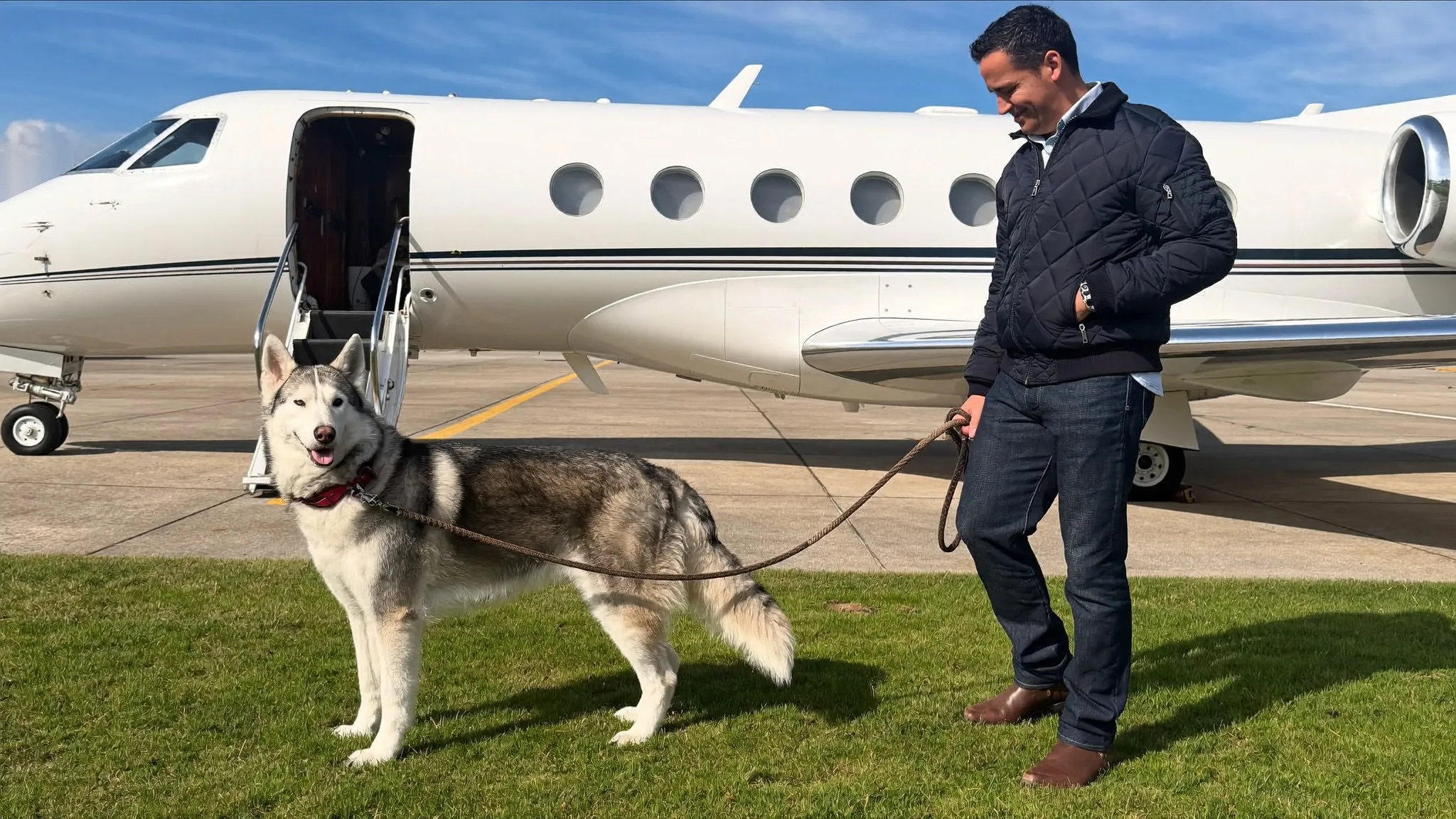
That is possible on a private flight, where your dog stays at your feet for the whole journey. Loulou Air, a brand of AEROAFFAIRES, a private aviation broker since 1991, offers Pay-per-Seat travel on shared private jet flights from Paris to Dubai: you pay for your seat, not the jet, and every ticket covers one human and their dog. None of the weight limit imposed by scheduled airlines applies, because the dog does not travel in the hold; capacity depends on the aircraft and on how many animals are aboard, and a broker approves each dog case by case. Boarding is through a private aviation terminal, with no queues, and the crew is briefed on welcoming animals, with water, bowls and blankets on board. Entry requirements are due on every flight, private ones included, and our brokers check every dog’s file before departure.
See flights to Dubai or talk to a broker. How these flights work is set out in Flying private with your dog.
Frequently asked questions
Can I take my dog onto a beach in Dubai?
No. Local Order No. (11) of 2003 prohibits bringing dogs into beaches and public parks anywhere in the emirate. Walks happen on the public highway, on a lead and with a collar, or in private spaces that accept animals.
Can my dog travel on the Dubai Metro or in a taxi?
No on both counts. The RTA fines bringing an animal into public transport and its facilities AED 100, except for guide dogs for blind persons, and the terms of its taxi service state that no pet may be brought onboard. Companies holding the RTA’s Animals Transport permit are the alternative the rules provide for.
Do I have to register my dog with the municipality for a short stay?
The local order applies to whoever keeps a dog or a cat, requiring registration with the competent department and an identification collar. Bringing the animal into the country is a separate matter, governed by import rules: they are gathered on our travel requirements for the United Arab Emirates page.
Sources
Rules change: check them against these sources before every trip.
- Dubai Legislation Portal — Local Order No. (11) of 2003 Concerning Public Health and Community Safety
- Dubai Legislation Portal — Executive Council Resolution No. (15) of 2009 amending Local Order No. (11) of 2003
- The Official Portal of the UAE Government — Banning private ownership of dangerous animals
- Dubai Municipality — Frequently Asked Questions
- Dubai Municipality — Integrated pet shelter opens and digital adoption launched
- RTA — About Dubai Metro and the list of fines
- RTA — Taxi Service with Regular Vehicles
- RTA — Activity Description Card, Animals Transport
- French Ministry of Agriculture — Precautions to take during a heatwave
- RSPCA — Dogs Die On Hot Walks